
- Home
- News
- JWA 2026 Spring Pollen Dispersion Forecast (Part 1)
~Spring pollen season is about to begin
Take extra caution on warm days; peak dispersion expected from late February~
News
JWA 2026 Spring Pollen Dispersion Forecast (Part 1)
~Spring pollen season is about to begin
Take extra caution on warm days; peak dispersion expected from late February~
2026.01.19
Press Release
On January 15, 2026, Japan Weather Association (JWA) released its report on the 2026 spring pollen dispersion forecasts at both national and prefectural levels. The forecasts cover cedar and cypress pollen nationwide excluding Hokkaido. However, white birch pollen forecast is available for Hokkaido.
■2026 Spring Pollen Dispersion Forecast (Part 1)
<Start of Cedar Pollen Dispersion>
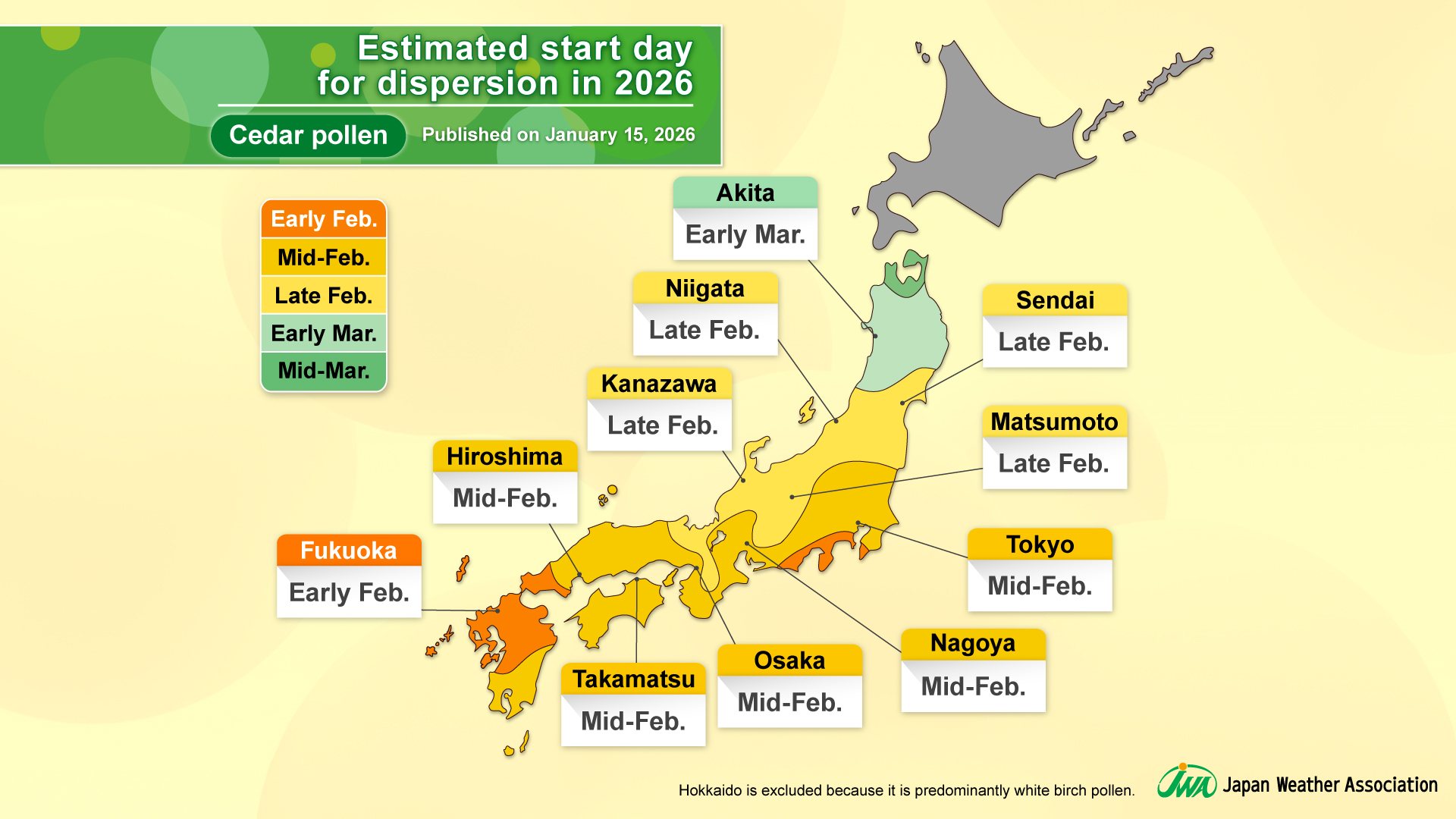
Cedar pollen dispersion is expected to begin in early February in areas such as Kyushu and Tokai. Across a wide region from Kyushu to Kanto, the start is likely to occur in mid-February, while in areas from Hokuriku to Tohoku it is expected between late February and mid-March. Temperatures from now through February are forecast to be near or above normal (Note 1) with large fluctuations. On warmer days, pollen is expected to begin dispersing in small amounts. The start of dispersion is expected to be around the usual time (Note 2); however, in Tohoku, where March temperatures are forecast to be higher, some areas may experience an earlier-than-usual start.
<Peak Period>
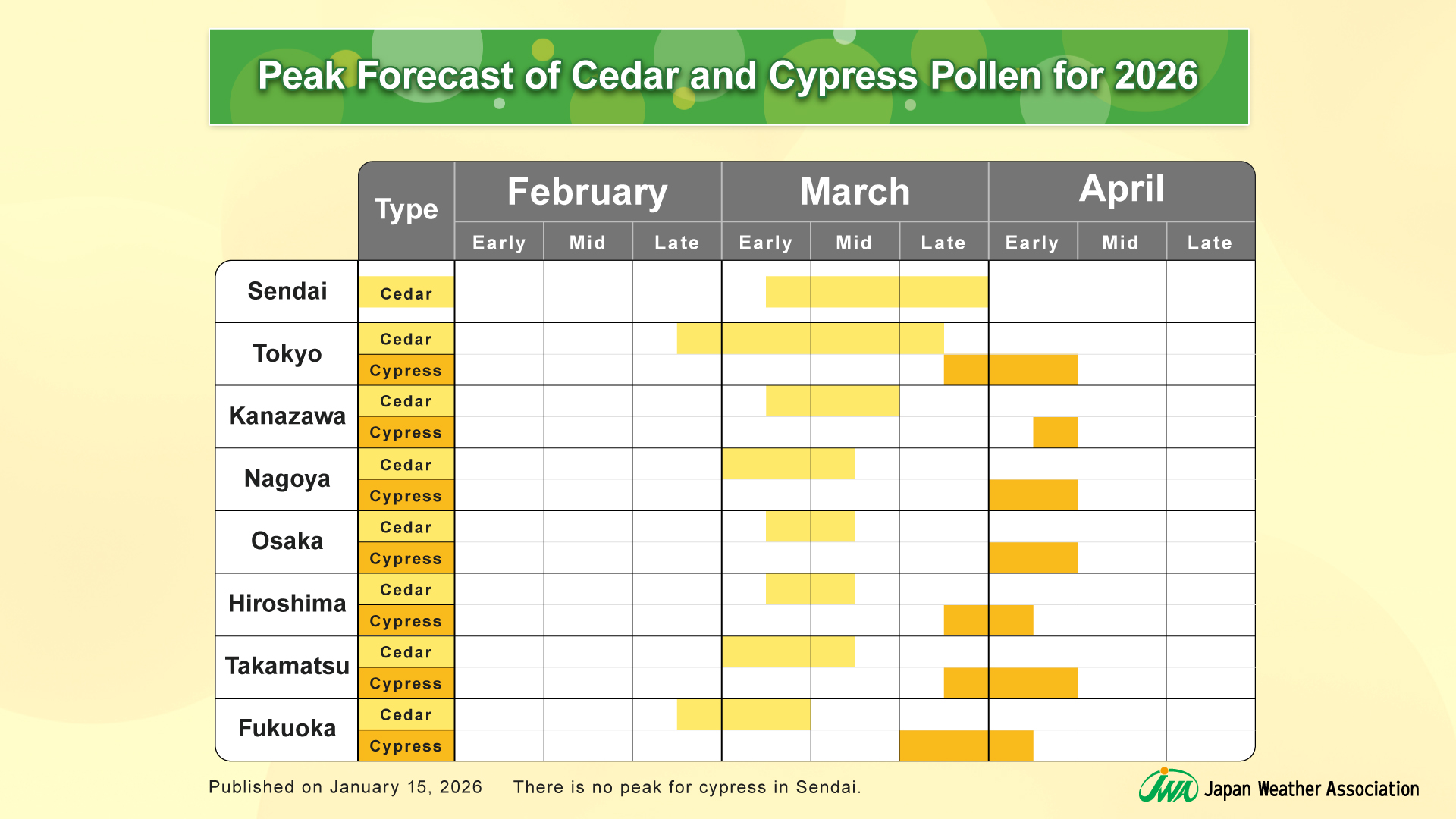
The peak of cedar pollen dispersion is expected to begin in late February in some areas. Across a wide region, the peak is anticipated from early to mid-March. The peak period for cypress pollen is expected from late March to early April. Peak timing for both cedar and cypress pollen is expected to be generally in line with the usual timing.
<Pollen Concentration Forecast>
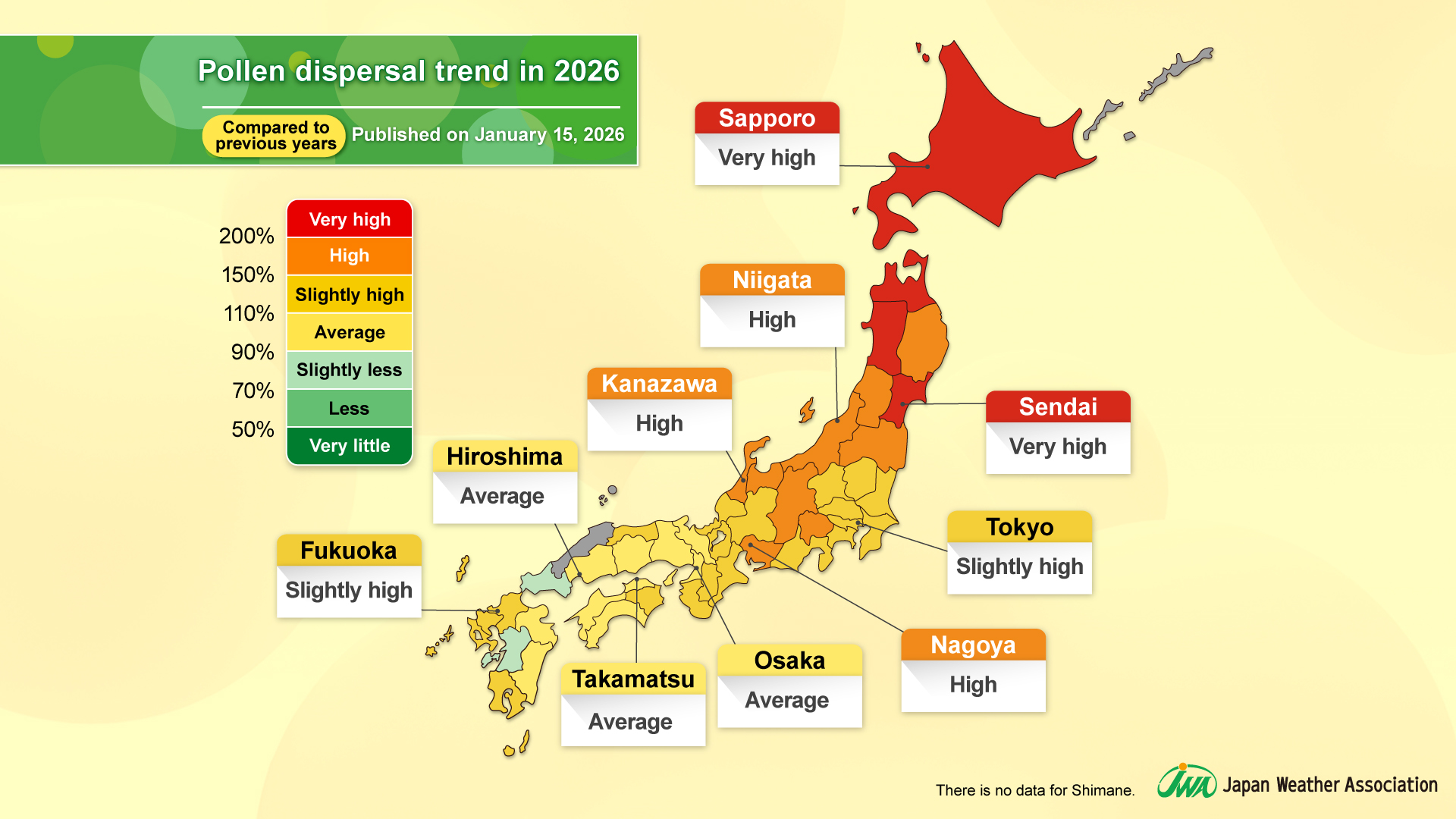
For spring 2026, pollen concentration (Note 3) is expected to be around the usual level in many parts of western Japan. In eastern and northern Japan, however, concentrations are expected to be higher than usual, with some areas experiencing significantly higher levels.
During the summer of 2025, high temperatures and abundant sunshine across Japan created favorable conditions for the formation of male flowers. In contrast, pollen concentrations in spring 2025 (the previous season) were higher than usual in western Japan, but lower than usual in eastern and northern Japan.
Because the formation of male flowers tends to be suppressed in the year following a season with high pollen concentration, spring 2026 levels are expected to decrease across a wide area of western Japan compared with the previous season. In eastern and northern Japan, concentrations are expected to be higher than in the previous season, with some areas experiencing significantly higher levels.
Note 1: “Normal” refers to the 30-year average (1991–2020).
Note 2: “Usual” refers to the 10-year average (2016–2025).
Note 3: “Pollen” refers to cedar and cypress pollen; in Hokkaido, white birch pollen is used instead.
Pollen Dispersal Forecast:
For more information on pollen dispersal forecast, follow the link below;
https://www.jwa.or.jp/english/service/seasonal-news-pollen-dispersal-forecast/
Please refrain from unauthorized corporate use of this information for purposes other than news reporting.
For corporate use, including product PR, please contact us using the inquiry form provided in the link below.
https://www.jwa.or.jp/english/contact/
PDF DOWNLOAD:JWA 2026 Spring Pollen Dispersion Forecast (Part 1)